You Can’t Sit Here
A Yorkshire Contemporary (formerly Tetley) PANIC! artist bursary commission, 2021.
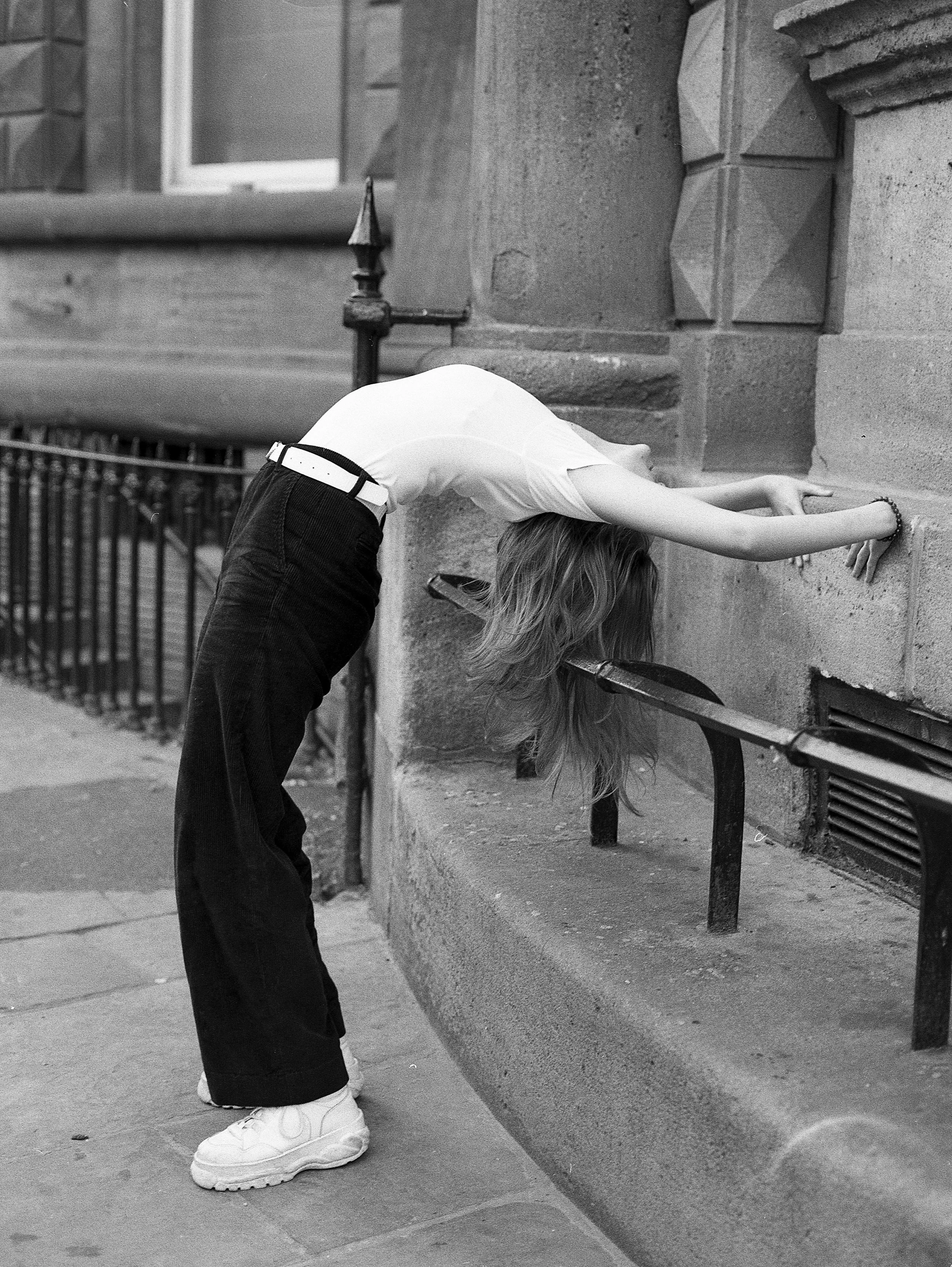
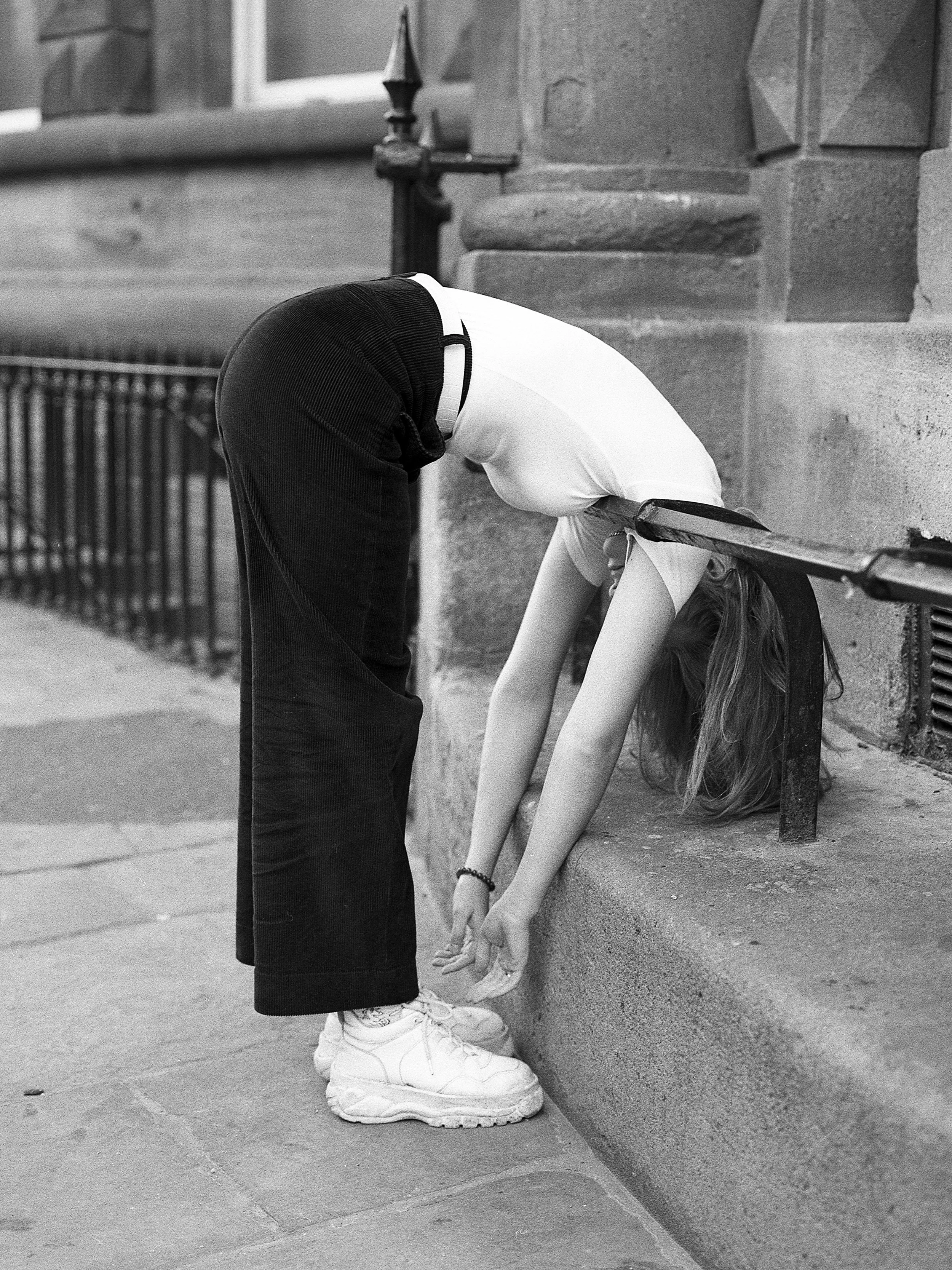
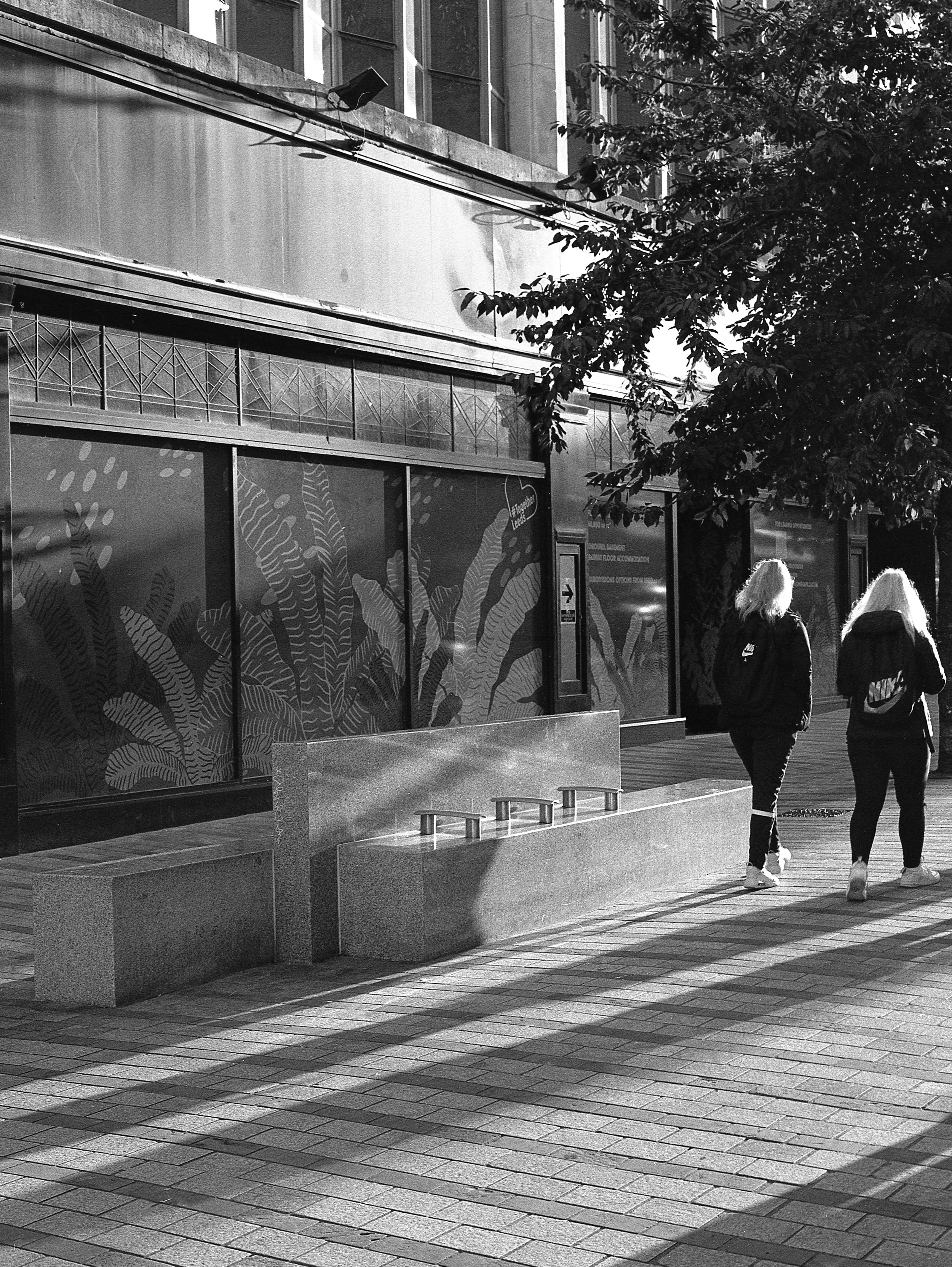
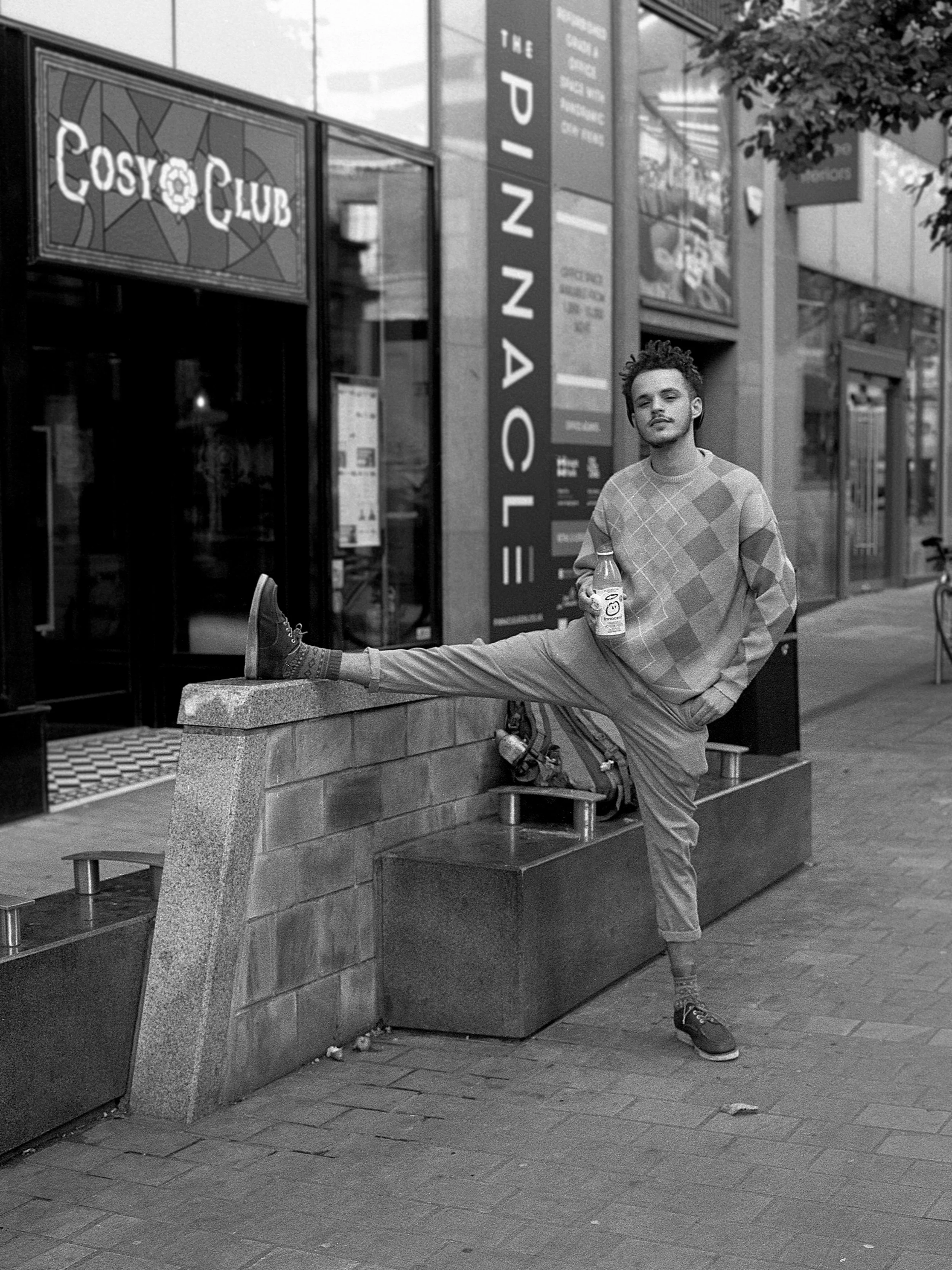
For her bursary project, Ryalls started exploring our relationship with hostile architecture; an urban design practice which intentionally restricts behaviour in public spaces, described by Ryalls as ‘anti-people’.
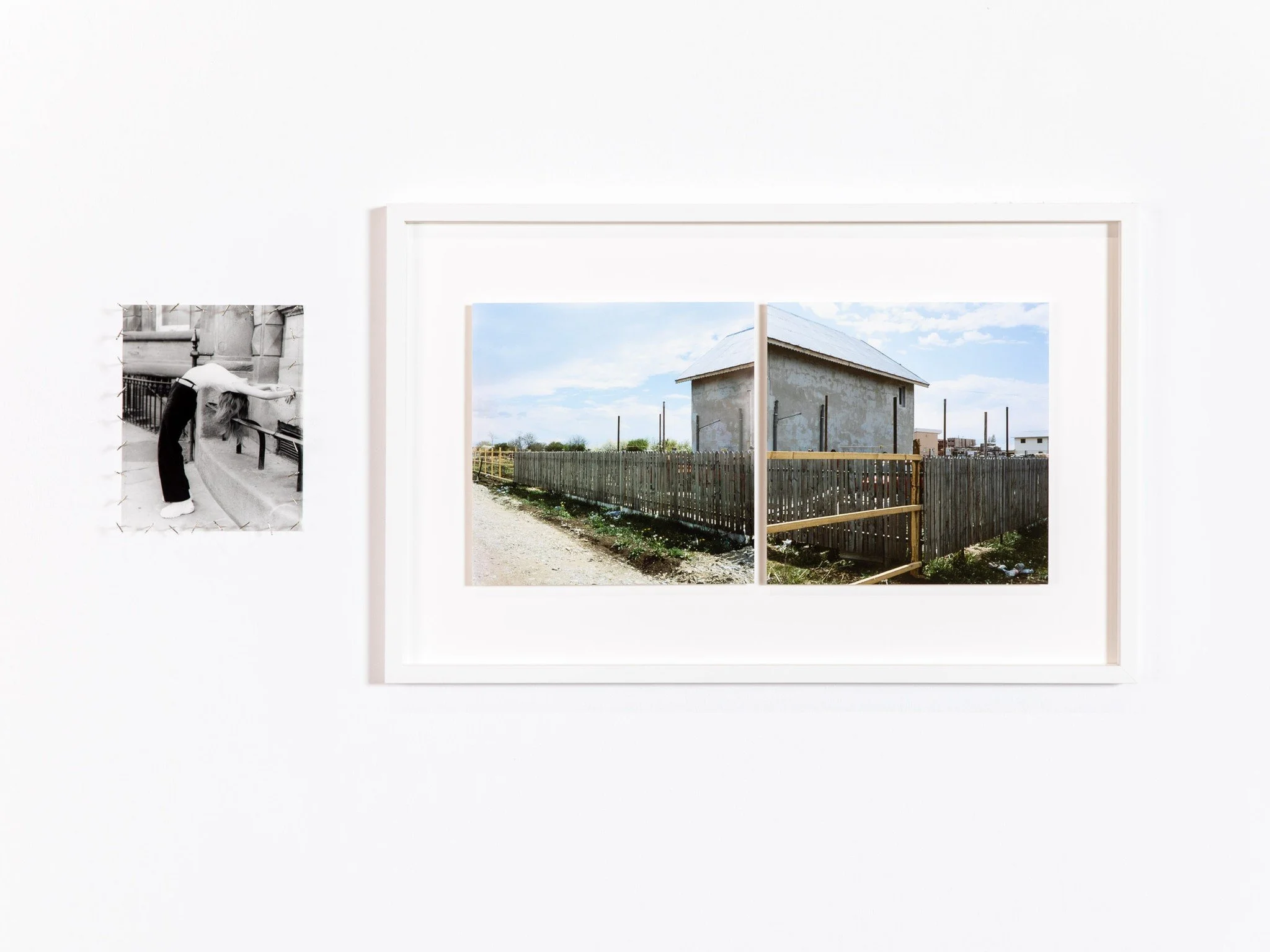
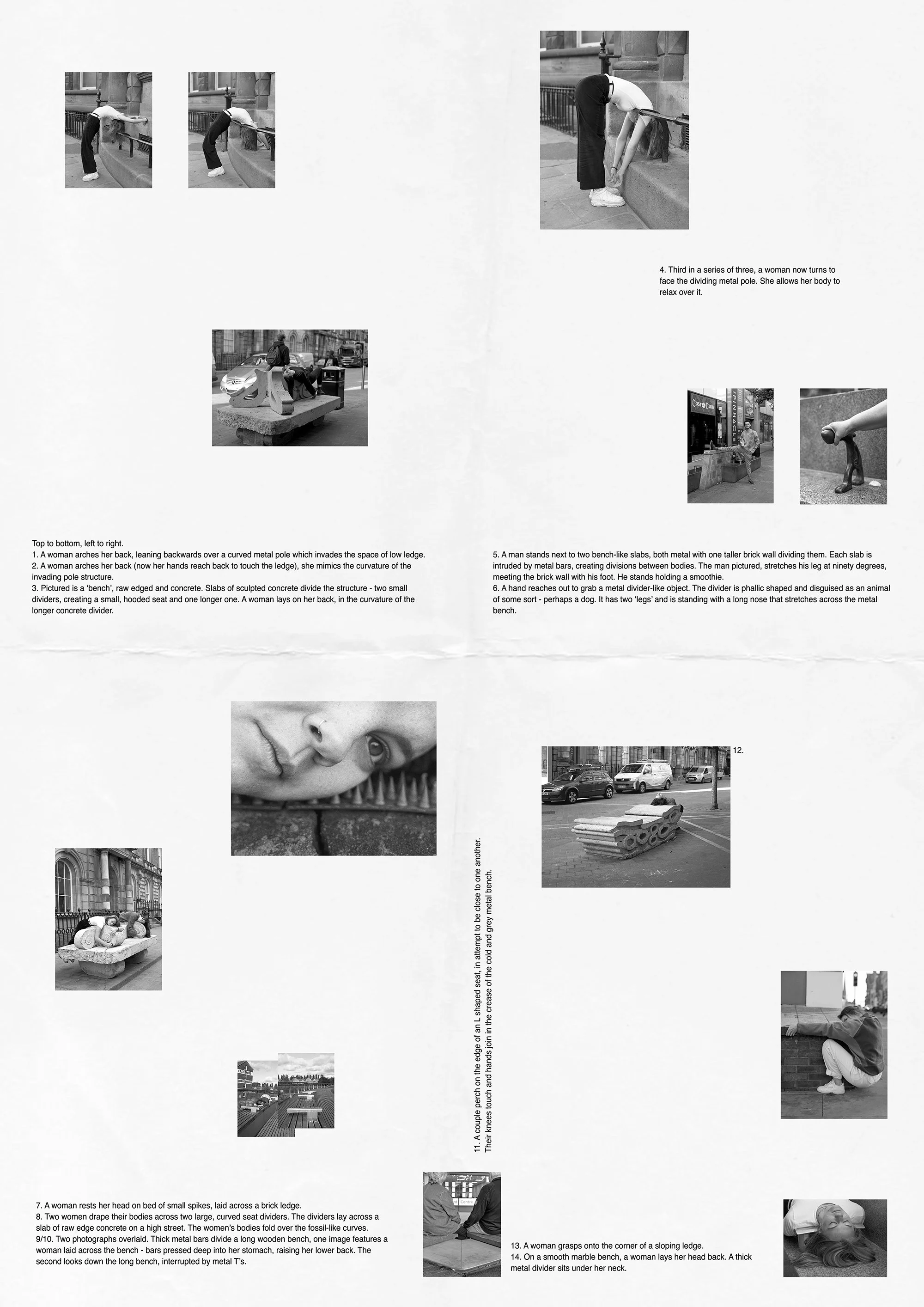
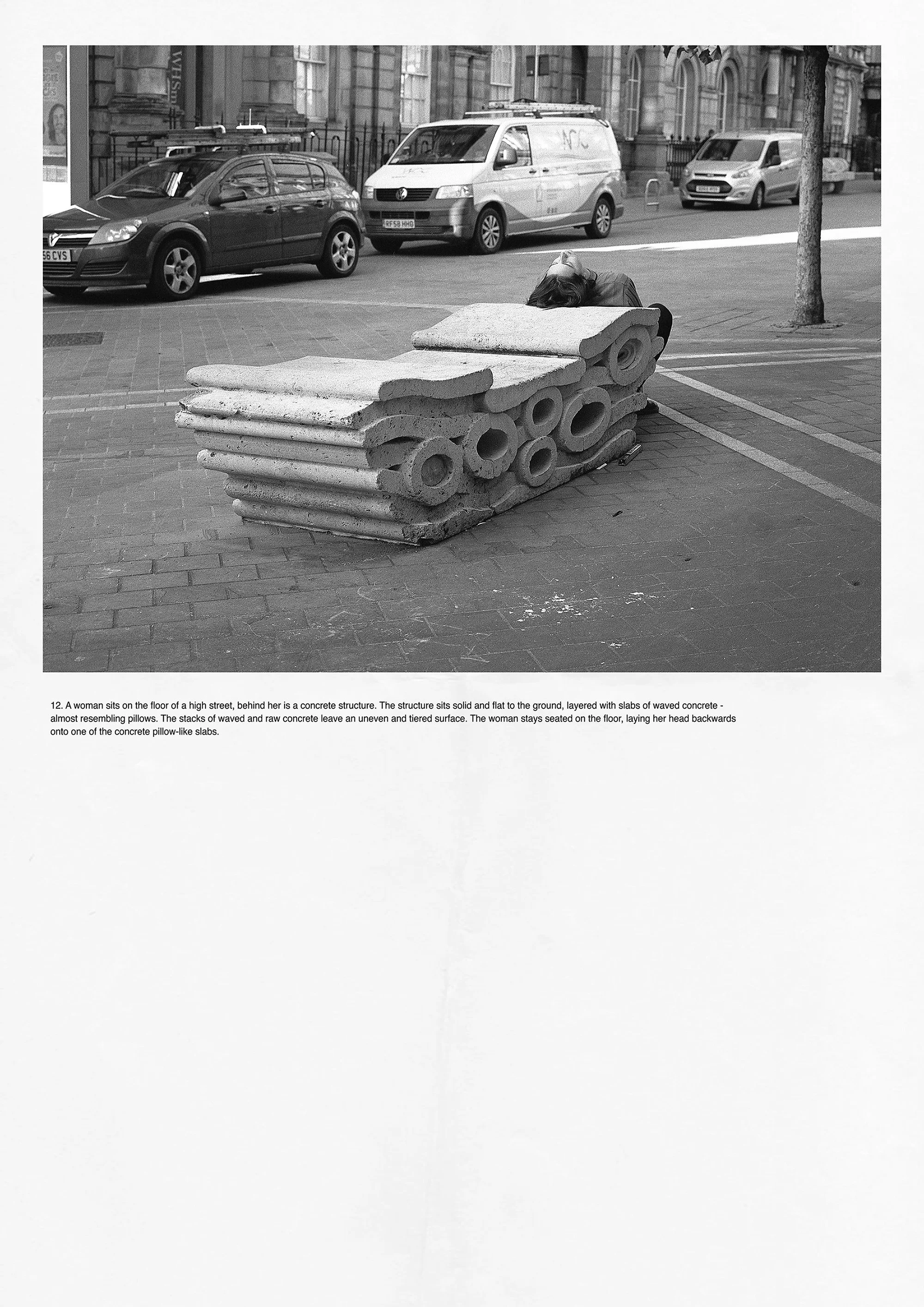
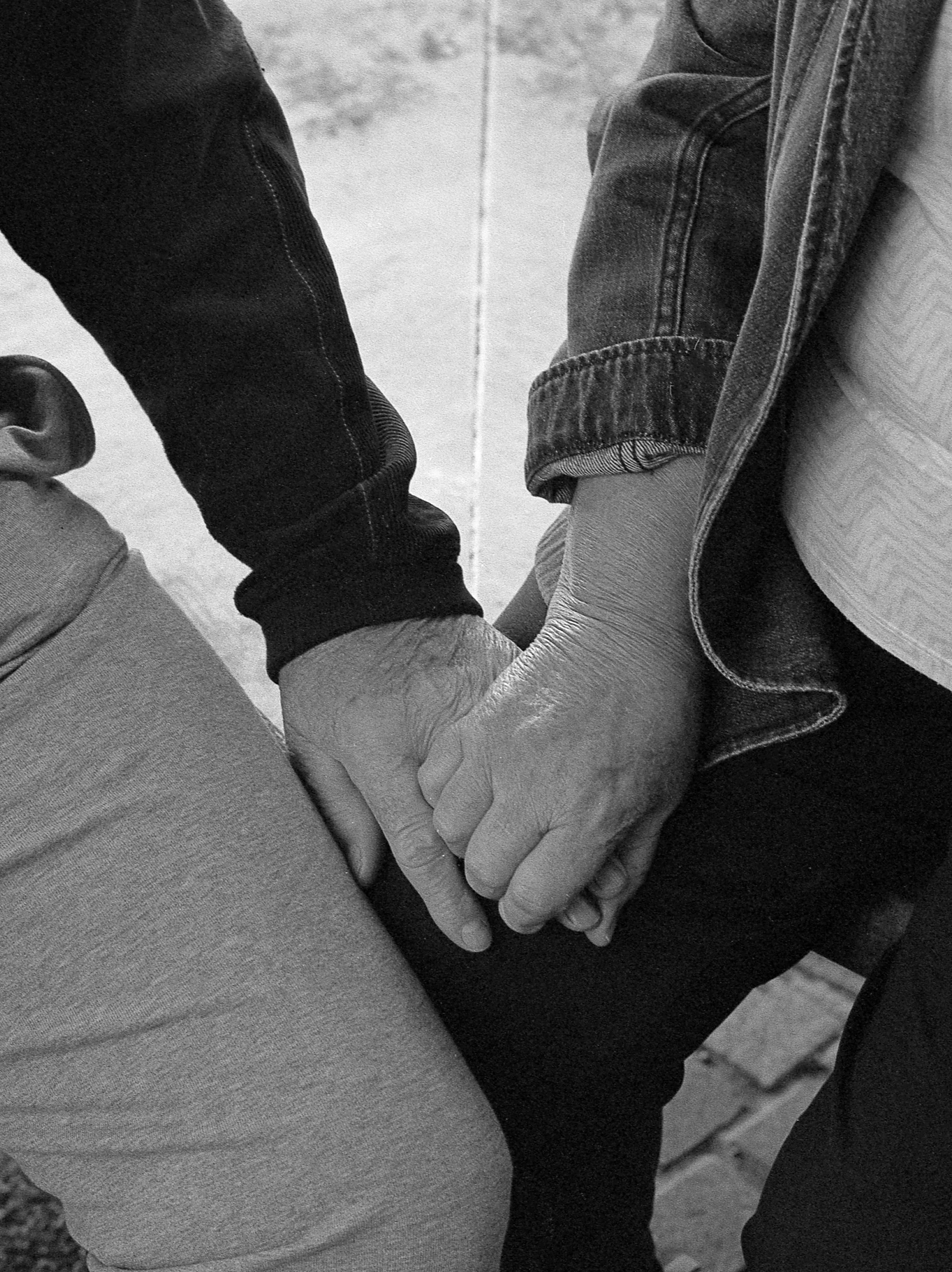
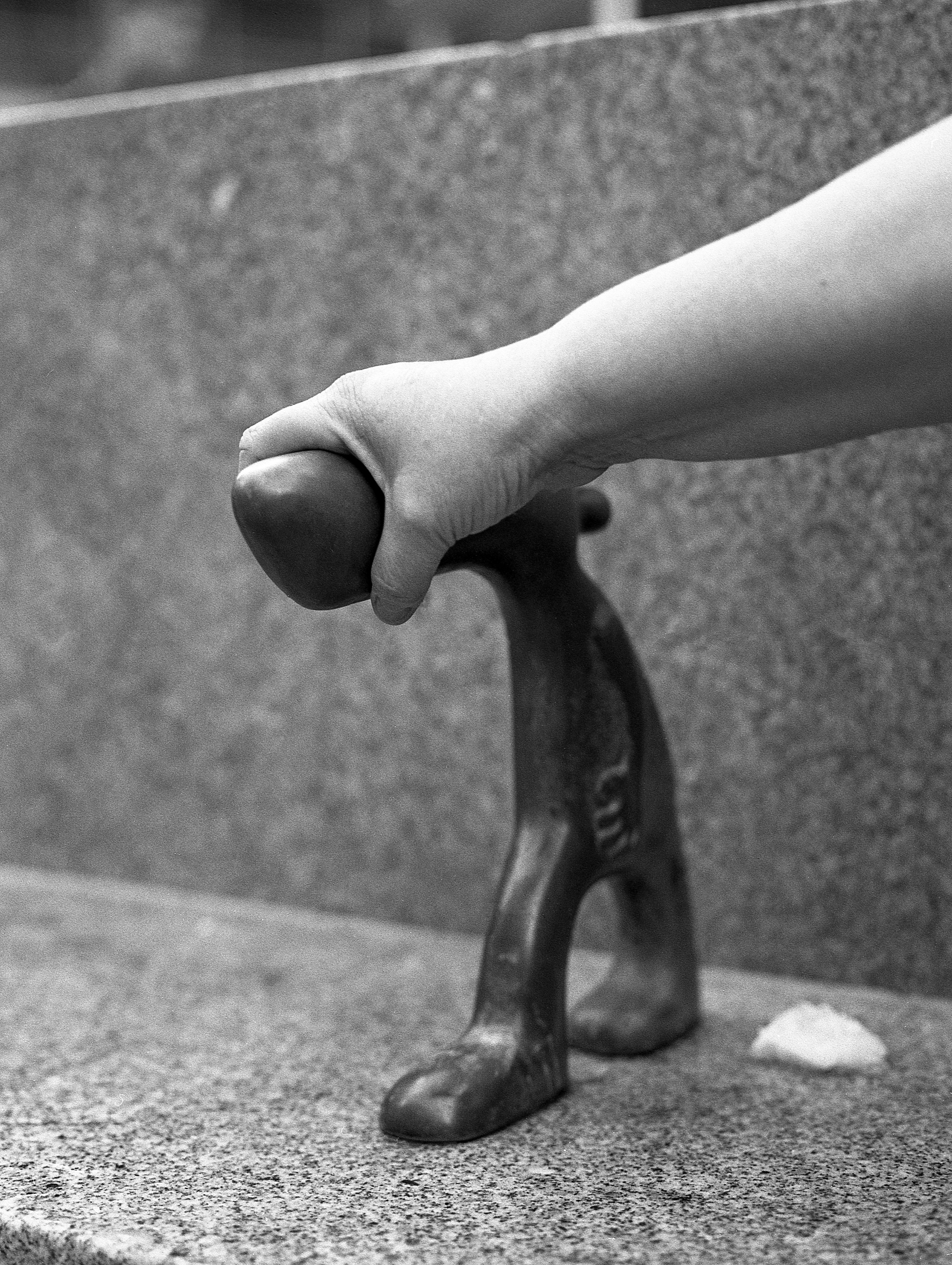
Using her Bronica 645 medium format camera, Ryalls has captured a range of choreographed and improvised interactions between people and elements of hostile architecture across Leeds, Wakefield and Castleford. The resulting images are sometimes gentle, almost romantic but always uncomfortable: two people fold themselves over a concrete bench designed to discourage lying down and congregating, someone bends their body over railings used to deter sitting.
Ryalls processes her film in the darkroom at The Art House, Wakefield. For this project, she scanned the negatives and created a poster zine, folded it and re-scanned, creating the images above and playing with the discord between physical and digital experiences. Referencing a broadsheet newspaper, Ryalls work spills and bleeds across the page.
The pages include the marriage of text and images, featuring an image description for each photograph. The descriptions stem from an exploration of how we accept these hostile structures as part of our landscape, provoking thought into the difference between how we respond to visual signifiers and written and spoken descriptions of our public spaces.
_________________________________________________________
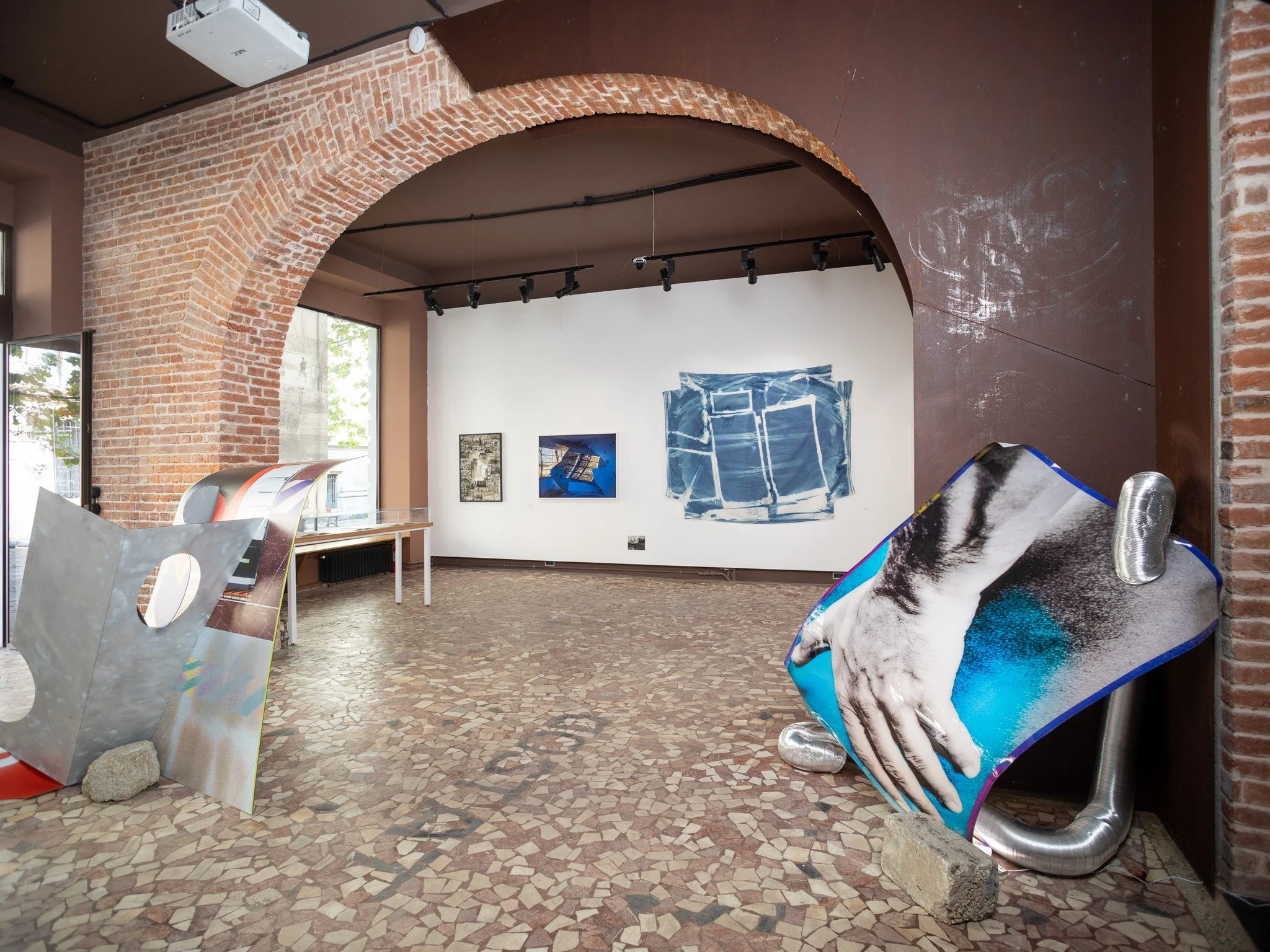
This work was later exhibited at 2/3 Gallery, Bucharest, as part of the group show Extended Spatialities, in 2024, curated by Laura Bivolaru.
Artists: David Barreiro, Bogdan Bordeianu, John Divola, Vladimir Florentin, Ion Grigorescu, Lina Ivanova, Anton Roland Laub, Ioana Marinescu, Andrei Mateescu, Alexander Rosenkranz, Emily Ryalls, Nadina Stoica, Anca Tintea.
“Expanded Spatialities problematizes the uniform image of the globalized city, asserting the human body as a creative agent of urban space. Through photography, collage, video, performance, and drawing, the city becomes a practiced space which residents and visitors alike occupy, build, remember and imagine across history. The thirteen exhibiting artists use the past, both individual and collective memories, and their own bodies to expand and reinterpret urban space at the intersection of fiction and reality, between cartography and psychogeography. In their practices, the political, economic, and social aspects that impact the city are brought to light, investigated, and destabilised. Thus, the image is understood as more than just a mirror of the existing space; it becomes a tangible extension of past and future possibilities.” (fragment from the curatorial text).